info@zinavo.com
 +91-77602 45945

Introduction
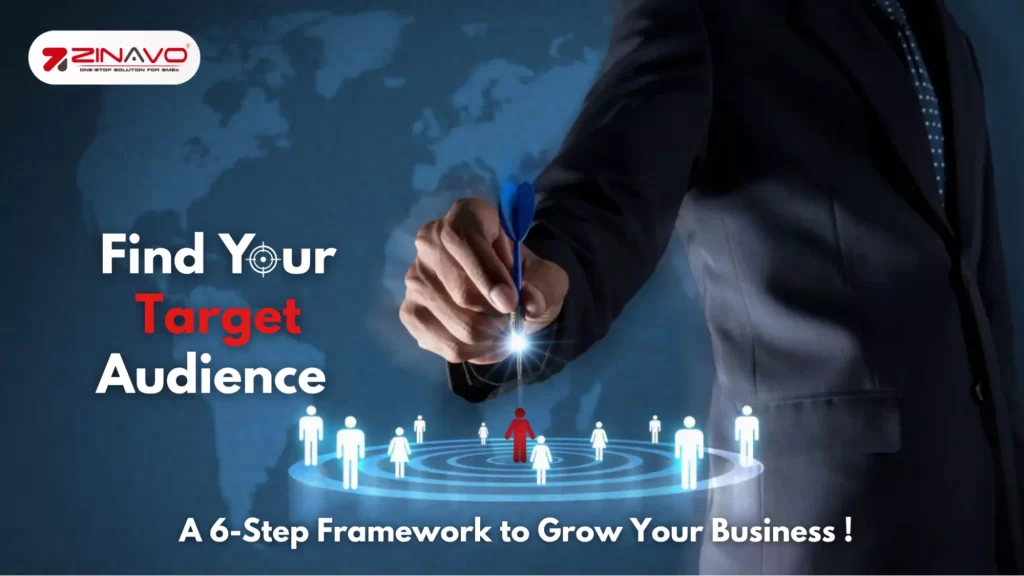
Creating a successful marketing strategy starts with a deep understanding of your target audience. You can’t develop an effective campaign without knowing your audience. Whether you’re launching your first product, building a brand, or expanding your digital presence, understanding your ideal customers is essential.
Many businesses make the mistake of trying to appeal to “everyone.” However, by being more specific about who they serve, your messaging, content, and advertising will become more effective. Using this 6-step framework, you will be guided through a proven process for clearly defining your target audience, increasing engagement, and boosting sales.
The steps will be explained with real-world examples and practical insights to ensure that you can begin using these insights immediately in your business.
Key Takeaways
The target audience is the group of individuals a business wishes to reach through marketing or advertising.
Identifying your target audience will help you create better messages, choose the right platforms, and increase the return on investment of your marketing efforts.
When finding your target audience, you must break down your market into smaller groups. You must identify their problems, learn where they spend their time, and test different campaigns.
It is advisable to use a variety of channels and listen directly to audience feedback to achieve the most effective results.
What is a target audience?
A target audience is a specific group of people most likely to benefit from your product or service. Unlike your broader target market, which includes everyone who might be interested, your target audience is the focused segment you actively engage with through tailored messaging and campaigns.
For example,
- A fitness brand’s target market could be “health-conscious adults.”
- Their target audience might be “busy working professionals aged 30–45 looking for 20-minute home workouts.”
The more precise you are, the better your marketing becomes.
Think of it this way:
- Your target market is the broader group your business serves.
- Your target audience is the exact group you’re trying to reach for a campaign.
- Customer personas contain information about your typical audience members, including what they like, their challenges, and their principles.
Why Identifying Your Target Audience Matters?
- If you don’t know who you’re speaking to, it’s almost impossible to run a successful campaign.
- Once you clearly understand your audience, everything becomes easier, from writing ad copy to choosing platforms and measuring ROI.
Here’s how finding your target audience helps:
1. Better segmentation
When you identify your target audience, you can break down your broad market into smaller, more meaningful groups. In this way, you will gain a better understanding of your customer base and be able to speak directly to their needs.
2. Sharper messaging
The most effective way to create relevant messages for your audience is to understand what matters to them. We can customise the copy to fit their needs, interests, values, and even sense of humour.
3. Smarter channel choices
Identifying your target audience will help you determine where to find them, whether they are on Instagram, LinkedIn, TikTok, podcasts, or even offline. This will prevent you from spending money on platforms not used by your audience.
4. Higher ROI and Better Ad Spend
When your audience is clearly defined, it’s easier to predict their buying likelihood. In this way, you can better manage your marketing budget, test campaigns early, and avoid wasting money on ineffective campaigns.
5. Stronger brand awareness
Creating content and ads that resonate with the correct audience increases your chances of being shared, talked about, and even picked up by the media. The brand becomes more visible, and loyal audiences are built over time as a result.
Step 1: Analyse Your Current Customer Base
Start by analysing customers who have already chosen your business. Loyal and repeat buyers often share similar characteristics. These patterns help reveal the audience most likely to engage with your brand.
Analyse your sales reports, website analytics, and social media activity. Identify demographic characteristics such as age, gender, location, and profession. Examine behavioural data like their motives for purchasing and the words they use to describe your products.
Analyse your sales reports, website analytics, and social media activity. Identify demographic characteristics such as age, gender, location, and profession. Examine behavioural data like their motives for purchasing and the words they use to describe your products.
For example, if you run an online fitness coaching business and notice that 70% of your paying clients are women aged 30–45 looking for post-pregnancy fitness solutions, that’s a powerful signal. You now have a clear starting point for crafting more targeted offers and messaging.
Step 2: Study Your Competitors’ Audiences
There is a lot you can learn about your ideal customer by observing your competitors. Look at their ads, social media content, and website copy to determine who they target. How are they targeting budget-conscious consumers, luxury seekers, or busy professionals?
Analyse how people interact with their content and what topics engage them. Identify demographic information and behavioural trends by utilising tools such as Facebook Audience Insights and SEMrush.
Identify opportunities beyond duplication. Identifying customer concerns or unmet needs in competitor comment sections is an opportunity for your brand to serve a neglected audience. This will enable your brand to position itself strategically.
Step 3: Define Your Product’s Unique Value Proposition
What makes your product or service unique and better for a specific audience? This is your value proposition. The most effective way to identify your target audience is to ask yourself, “Who does your product or service primarily benefit?”
Project management tools are often used by freelancers, small teams, and large organisations. When your software emphasises simplicity and visual planning, your ideal customers are likely to be creative teams or solopreneurs, not corporate IT departments.
Ask yourself: What problem do I solve? Who feels this pain the most? Why would someone choose me over another option? You will be able to identify the audience who needs your value proposition more easily if your value proposition is clear.
Step 4: Segment Your Market Based on Behaviours and Needs
Customers in a broad category are not alike. This is why audience segmentation is so critical. It is more effective to target a smaller group based on their behaviour rather than a large group.
Consider someone who shops for skincare. People may desire affordable, cruelty-free products. It is also possible to prioritise clinical ingredients and dermatologist recommendations. A third group may seek anti-ageing treatments.
By segmenting your audience according to their behaviour, needs, and motivations, you can develop marketing messages that resonate deeply with them. This leads to higher engagement, better conversion rates, and stronger brand loyalty.
Identify your target segments using tools such as Google Analytics, customer surveys, and email marketing data.
Step 5: Create Detailed Buyer Personas
After you have gathered insights, it is time to bring your audience to life with buyer personas. These personas represent fictional, research-based representations of your ideal customer.
A strong persona includes:
- Name and job title
- Age, location, income level
- Goals and challenges
- Preferred communication channels
- Buying habits and decision-making
For example,
“Sarah, 34, is a marketing manager at a mid-sized tech company. She’s overwhelmed with content planning and wants tools that save her time. She reads industry blogs, follows experts on LinkedIn, and values data-driven solutions.”
These personas will help your team make better decisions about content, design, advertising, and customer service. This is because you’re no longer guessing who you’re talking to.
Step 6: Test, Refine and Validate Your Audience!
Real-world testing is necessary even for the most well-researched audience profiles. Develop targeted advertisement campaigns, create niche content, or conduct surveys to validate your assumptions.
Consider A/B testing to compare messaging for different segments. Analyse which audience responds better to emotional versus logical appeals, or which platform generates the most conversions.
Make sure you pay attention to metrics such as click-through rates, time spent on the page, and cost per acquisition. When one group consistently engages more than another, you should double down on your efforts.
Researching your audience is not a one-time process but ongoing. In the same way that your business evolves, so will your audience. Stay curious, listen, and adapt your strategies accordingly.
Why This Framework Works Better Than Guessing?
Many companies define their audience based on assumptions: “Our product is designed for women between 25 and 40.” But that is not a target audience; it is a demographic. Real targeting requires a deeper understanding.
This six-step framework combines data, observation, and empathy to develop clear, actionable understandings of your customers. Using this technique, you can move from broad generalisations to precise, high-impact marketing tactics. It makes everything easier when you get it right. Your content performs better, your ads convert better, and your brand builds stronger relationships.
Conclusion
Identifying your target audience does not involve chasing every potential customer but rather identifying those who need your services the most. Using this 6-step framework, you can move from confusion to clarity and from wasted efforts to meaningful growth.
When you’re ready to take your marketing to the next level, Zinavo provides audience research and digital strategy services that help businesses identify, understand, and engage their ideal customers. We help you build a customer-focused strategy that delivers real results, from data analysis to persona development and campaign execution.
Connect with the right people instead of marketing to everyone. Zinavo can help you identify your true audience and grow your business effectively.