info@zinavo.com
 +91-77602 45945

Introduction
Progressive Web Apps (PWAs) are leading the way for businesses in 2025 to deliver better digital experiences faster, smarter and more cost-effectively. Websites and mobile apps are increasingly blurring into one, leading PWAs to emerge as a game-changing technology, combining the speed of websites with the power of native apps.
Brands are adopting PWAs to enhance user engagement, improve performance and reduce development costs. So why are PWAs so popular in 2025 and why are they becoming popular? Let’s explore.
What Are Progressive Web Apps (PWAs)?
A Progressive Web App (PWA) is a type of web application that uses modern web technologies to deliver an app-like experience directly through a web browser. Unlike traditional apps, PWAs don’t require app store installation. Users can simply access them via a URL yet still enjoy features like:
- Push notifications
- Offline access
- Fast loading speeds
- Responsive layouts
- App-like interfaces
PWAs merge the best of websites and mobile apps, giving users a smooth, reliable experience without the difficulty of downloading and storing.
Why PWAs Are Gaining Popularity in 2025
Technology advancements and changing user behavior have made PWAs a preferred solution across industries. Here are the key reasons why PWAs are taking over in 2025:
1. Unmatched Speed and Performance
PWAs can load instantly even on slow internet connections due to the caching of essential resources by service workers. A PWA delivers near-instant page load times in 2025. Faster websites not only enhance user experience but also improve SEO rankings and conversion rates.
2. No App Store Dependency
PWAs run directly in browsers, unlike native apps that must be approved and updated via app stores. Businesses can publish updates instantly, avoiding app store fees and restrictions. This freedom and flexibility make PWAs a smart choice for companies that want agility in their digital strategy.
3. Cost-Effective Development
Building separate apps for iOS, Android and the web can be expensive and time-consuming. PWAs eliminate this problem by offering one unified solution that works across all devices and platforms. It will help businesses save big on maintenance and development costs in 2025 with a single-codebase approach.
4. Offline Access and Reliability
PWAs can function without an internet connection. Caching data locally allows users to continue browsing, viewing products or reading content offline. This reliability makes PWAs a powerful tool for businesses targeting users in regions with inconsistent internet access.
5. Enhanced User Engagement
PWAs support push notifications, background sync and easy home-screen installation all key features that boost engagement. Users can receive updates, offers and alerts in real-time, just like they would with a native app. In 2025, personalization and engagement are the pillars of user retention and PWAs make this easier than ever.
6. Improved Security
PWAs use HTTPS to ensure data integrity and security. The use of HTTPS encryption helps both users and businesses protect themselves against cyber threats. PWAs build user trust and safeguard transactions, especially on e-commerce and fintech platforms.
7. SEO Benefits
PWAs are indexed by Google because they are built using web technologies. This makes them far more discoverable than native apps. A PWA helps businesses maintain strong online presences and improve their search rankings in 2025, when visibility drives growth.
Real-World Examples of PWA Success
Many major companies have already utilized the power of PWAs with measurable success:
- Twitter Lite: Reduced data usage by 70% and saw a 75% increase in tweets.
- Pinterest: Increased user engagement by 60% with their PWA version.
- Starbucks: Enabled customers to browse the menu and customize orders offline.
- Alibaba: Achieved a 76% higher conversion rate after implementing a PWA.
PWAs allow brands to grow faster and smarter due to their convenience, performance and reach.
Why 2025 Is the Year of PWAs
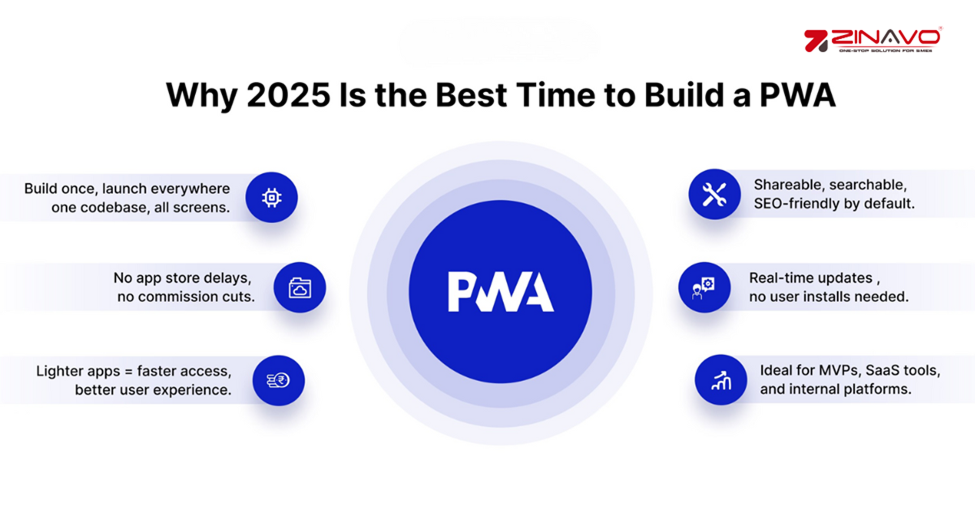
The year 2025 marks a turning point for web and app technologies. Several factors contribute to the rise of PWAs:
- 5G and faster internet adoption make web experiences smoother than ever.
- Advancements in browsers (like Chrome, Safari and Edge) now fully support PWA features.
- Growing demand for lightweight apps in emerging markets with limited device storage.
- Businesses are focusing on ROI and opting for scalable, cost-efficient solutions.
PWAs will become the standard for delivering high-performance digital experiences in the future.
Industries Adopting PWAs in 2025
PWAs are scalable and suitable for nearly every sector. Some of the top industries adopting them include:
- E-commerce: Faster shopping experiences and offline product catalogs.
- Travel: Seamless booking, itinerary management and push updates.
- Education: Accessible e-learning platforms with offline lessons.
- Media & Entertainment: Smooth streaming and personalized recommendations.
- Healthcare: Appointment scheduling and teleconsultation access.
The flexibility of PWAs ensures they meet the unique needs of each industry while providing consistent, engaging user experiences.
The Business Benefits of PWAs
Implementing a PWA can transform a business in multiple ways:
- Better Conversions: Faster loading leads to higher sales and engagement.
- Lower Bounce Rates: Users stay longer due to smooth experiences.
- Cross-Platform Reach: Works on any device or browser.
- Easy Updates: Instant improvements without user downloads.
- Brand Loyalty: Push notifications and home-screen icons build trust.
PWAs offer the ideal balance between cost and capabilities for companies that want to enhance scalability, engagement and performance.
How to Get Started with a PWA?
The following is a simple guide to getting started with this new technology:
- Analyze your website performance and identify user pain points.
- Plan core features you want to include (offline access, push notifications, etc.).
- Hire experienced PWA developers or an agency skilled in modern frameworks.
- Build and test thoroughly across devices and browsers.
- Deploy and monitor performance to continuously improve performance.
Conclusion
Businesses will be able to engage users faster, more reliably and for less cost with Progressive Web Apps (PWAs) in 2025. The perfect balance between user experience and efficiency can be found with PWAs, because they deliver fast performance, offline access and cross-platform compatibility. The adoption of PWAs aren’t just an upgrade, it’s a smart move toward the future of web development. The PWA revolution has arrived and don’t get left behind.