info@zinavo.com
 Call Us

Introduction
In today’s digital-first business environment, a website is not a one-time project it is a continuously evolving digital asset. Especially in competitive markets like Bangalore and across global startup ecosystems, websites require regular updates, security monitoring, performance optimization, and content improvements to remain effective. Without proper maintenance, even a well-designed website can become slow, vulnerable, outdated, and ineffective in generating leads or conversions.
Website maintenance is no longer optional in 2026 it is a critical operational requirement. Businesses that ignore maintenance often face issues such as broken pages, security breaches, poor Google rankings, and reduced user trust. Choosing the right maintenance package ensures your website remains secure, fast, SEO-friendly, and aligned with your business goals. This guide explains how to select the right plan based on business size, traffic level, functionality, and long-term digital strategy.
Trending Update (2026 Website Maintenance Market Shift)
In 2026, website maintenance has shifted from “basic technical support” to a growth-driven digital performance system. AI-powered monitoring tools are now used to detect downtime, SEO errors, and security risks in real time. Google’s algorithm updates also prioritize websites with continuous technical health improvements rather than static optimization.
Another major trend is the rise of managed website ecosystems, where maintenance includes SEO, performance tuning, UX improvements, and conversion optimization in a single package. Businesses are no longer choosing cheapest plans—they are choosing performance-based maintenance that directly impacts revenue and ranking stability.
What is a Website Maintenance Package?
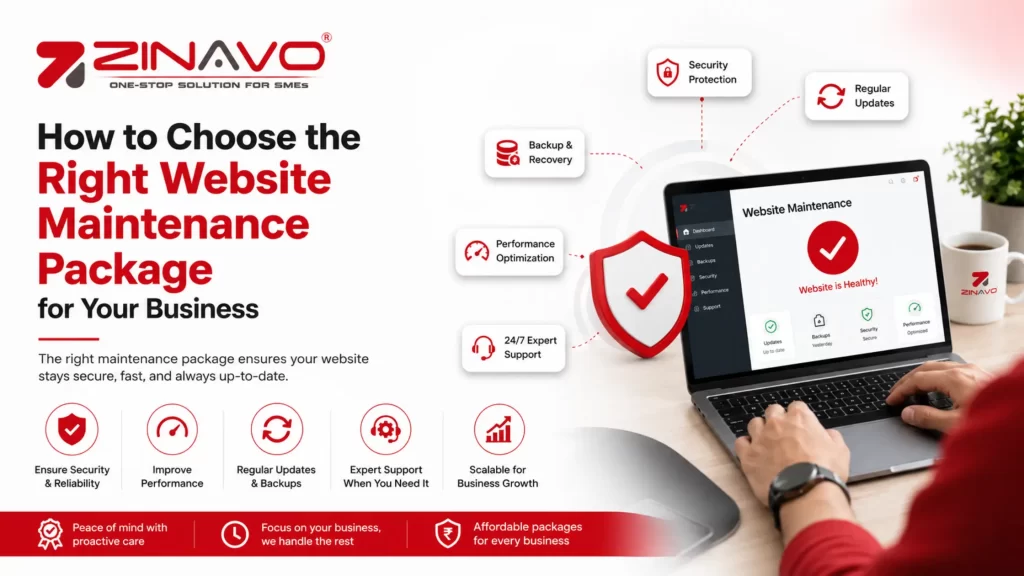
A website maintenance package is a structured service plan that ensures your website remains fully functional, secure, and updated on a regular basis. It typically includes technical updates, security monitoring, backups, performance optimization, bug fixes, and content updates depending on the plan you choose.
In modern web development, maintenance is considered an essential extension of the website lifecycle. It ensures that plugins, frameworks, and server environments remain compatible and secure. Additionally, maintenance packages help businesses avoid downtime, improve loading speed, and maintain SEO rankings. For startups and growing businesses, this becomes especially important because even small technical issues can directly impact customer experience and revenue performance.
Types of Website Maintenance Packages
Website maintenance packages are generally categorized into three main levels based on complexity and business needs. The basic plan usually covers essential updates such as plugin updates, security checks, and limited technical support. This is suitable for small websites with low traffic and minimal functionality.
The standard maintenance package includes regular updates, performance optimization, backups, uptime monitoring, and basic SEO checks. This is ideal for growing businesses that rely on their website for lead generation or customer engagement. It ensures stable performance and reduces technical risks.
The advanced or premium maintenance package is designed for high-traffic websites, ecommerce platforms, and SaaS applications. It includes full technical support, advanced security monitoring, speed optimization, database management, and continuous improvements.
Website Maintenance Cost Overview (2026)
Website maintenance costs vary depending on website size, complexity, and required services. For basic websites, maintenance typically ranges from ₹2,000 to ₹8,000 per month. These plans usually include basic updates, backups, and security checks.
For medium business websites, costs generally range from ₹8,000 to ₹25,000 per month. These plans include performance optimization, SEO monitoring, regular updates, and technical support. For ecommerce and enterprise websites, maintenance costs can exceed ₹25,000 per month due to advanced infrastructure requirements, high traffic handling, and continuous optimization needs. A poorly maintained website can lead to higher long-term losses due to downtime, security issues, and lost customers.
Website Maintenance Package Comparison (2026 Trending Table)
| Features / Plans | Basic Plan (Starter) | Standard Plan (Business) | Premium Plan (Growth) | Enterprise Plan |
| Monthly Price | ₹1,500 – ₹5,000 | ₹5,000 – ₹15,000 | ₹15,000 – ₹40,000 | ₹40,000+ |
| Website Updates | Basic plugin/theme updates | Regular updates + testing | Priority updates + staging | Real-time updates |
| Security Monitoring | Basic firewall | Advanced security + malware scan | 24/7 security + threat removal | Enterprise-grade security (SOC-level) |
| Backups | Weekly backups | Daily backups | Multiple daily backups | Real-time cloud backups |
| Performance Optimization | Minimal | Speed optimization | Advanced caching + CDN | Full performance engineering |
| SEO Support | Not included | Basic on-page fixes | SEO monitoring + fixes | Advanced SEO + strategy |
| Content Changes | Limited | Moderate | Unlimited small edits | Dedicated content team |
| Uptime Monitoring | Basic | 24/7 monitoring | 24/7 + alerts | SLA-based 99.99% uptime |
| Support Response Time | 48–72 hrs | 24–48 hrs | 2–6 hrs | Instant / priority support |
| Best For | Small static websites | Growing business sites | High-traffic business sites | Large enterprises & eCommerce |
How to Choose the Right Maintenance Package
Choosing the right maintenance package depends on several key factors that directly impact your website’s performance and business goals. The first factor is website complexity. A simple informational website requires minimal maintenance, while ecommerce or custom web applications require continuous monitoring and updates due to dynamic content and user interactions.
The second factor is traffic volume. Websites with higher traffic need stronger hosting support, faster performance optimization, and advanced security measures to handle load efficiently. The third factor is business dependency. If your business depends heavily on online leads or sales, investing in a higher maintenance plan becomes essential to avoid downtime and performance issues.
Another important factor is growth stage. Startups may begin with basic maintenance, but as traffic and features grow, upgrading to a more advanced package ensures scalability.
Common Mistakes Businesses Make When Choosing Maintenance Plans
One of the most common mistakes businesses make is selecting a maintenance plan based only on price rather than requirements. This often leads to insufficient support and long-term technical issues. Another mistake is ignoring scalability. Businesses often choose basic plans even when their website is growing rapidly, resulting in performance bottlenecks.
Many businesses also overlook security requirements, assuming that maintenance is only about updates. In reality, security monitoring is one of the most critical aspects of website maintenance. Additionally, some companies fail to review service scope properly, leading to confusion about what is actually included in the package.
Avoiding these mistakes ensures better performance, improved security, and long-term cost efficiency.
Making the Right Decision
Choosing the right website maintenance package is not just a technical decision—it is a long-term business strategy that directly influences your website’s performance, security, SEO visibility, and customer trust. In 2026, where digital competition is extremely high and user expectations are constantly increasing, a poorly maintained website can quickly lose rankings, traffic, and conversions. On the other hand, a well-maintained website becomes a stable growth engine that supports marketing, sales, and brand credibility.
The right decision depends on understanding your business stage, website complexity, traffic volume, and revenue dependency. Instead of focusing only on cost, businesses should prioritize reliability, uptime stability, security protection, and performance optimization. A basic plan may be sufficient for small websites, but growing businesses and ecommerce platforms require structured, proactive, and scalable maintenance support to avoid technical risks and performance drops.
Ultimately, website maintenance should be viewed as a continuous investment in digital growth, not an expense. Businesses that consistently maintain their websites achieve better SEO rankings, stronger user engagement, and higher conversion rates compared to those that ignore maintenance. The most successful approach is to choose a package that aligns with both your current needs and future scalability, ensuring your website remains fast, secure, and future-ready in an evolving digital ecosystem. ensures your website remains fast, secure, scalable, and aligned with your business goals.