info@zinavo.com
 +91-77602 45945


Introduction
A professional website is essential in today’s digitally driven world. Whether you’re launching a startup, growing an online store or establishing your personal brand the question on everyone’s minds is: how much does it cost to develop a website in 2025?
There is no one-size-fits-all solution. The cost of developing a website in 2025 will be determined by several factors, including the complexity of the design, functionality, platform choice and the expertise of the development team. Pricing varies from a few hundred dollars to more than $100,000 for everything from simple brochure sites to full-scale web applications.
Let’s analyze everything that influences the website development cost in 2025, so that you can make an informed decision regarding the development of your website.
What Determines Website Development Costs?
We should first examine what drives costs in modern web development before diving into price ranges:
- Type of Website (Brochure, E-commerce, Web App)
- Design Complexity & Customization
- Features & Functionality (Booking systems, user logins, payment gateways)
- Content Management System (CMS)
- Mobile Responsiveness & UX/UI Design
- SEO & Performance Optimization
- Ongoing Maintenance & Support
Each of these elements adds layers of time, skill, and resources directly impacting the final price.
1. Basic Brochure / Small Business Website
Price Range: $500 – $3,000
Ideal for small businesses, freelancers, or service providers who need a professional online presence without complex features.
This typically includes:
- 3–7 static pages (Home, About, Services, Contact)
- Responsive design for mobile devices
- Basic SEO setup (meta tags, sitemap)
- Simple contact forms
- Integration with Google Analytics
These websites are often built using WordPress platforms with pre-designed themes, keeping costs low. However, even within this category, custom designs or branding work can push prices toward the higher end.2
2. Professional / Corporate Website
Price Range: $3,000 – $10,000
Established businesses, agencies, or consultants that require a more robust site with advanced design and content structure.
Key features include:
- Custom UI/UX design aligned with brand identity
- Dynamic content sections and blogs
- Enhanced navigation and internal linking
- Integrated lead capture tools
- Advanced SEO optimization
- Faster loading speeds and accessibility compliance
These projects require skilled designers and developers, increasing labor costs but delivering better engagement and credibility.
3. E-commerce Website
Price Range: $5,000 – $40,000+
Selling products online demands a secure, scalable, and user-friendly shopping experience. The cost varies widely based on product volume, integrations, and customization needs.
Common e-commerce platforms:
- Shopify ($5,000 – $15,000): Fast setup, ideal for startups
- WooCommerce (WordPress-based): $6,000 – $20,000
- Magento/Adobe Commerce: $20,000 – $100,000+ for enterprise stores
Core components included:
- Product catalog management
- Secure payment processing (Stripe, PayPal, etc.)
- Inventory tracking and shipping calculators
- Customer accounts and order history
- Abandoned cart recovery
- SSL encryption and PCI compliance
It is natural for high-end stores with custom checkout flows, AI recommendations, or multi-vendor marketplaces to command greater budgets.
4. Custom Web Application
Price Range: $15,000 – $100,000+
If you’re building a SaaS platform, membership portal, booking system, or any interactive tool, you’re entering the realm of custom web application development.
Examples include:
- Online learning platforms
- CRM systems
- Healthcare portals
- Real estate listing dashboards
- Subscription-based services
Development involves:
- Full-stack programming (frontend + backend)
- Database architecture
- User authentication and role-based access
- API integrations (payment, email, SMS)
- Admin panels and reporting tools
Because these are highly tailored solutions, every hour of development counts. Agile methodology is often used, with phased delivery and ongoing testing.
Hidden Costs to Consider
While initial development is a major investment, smart planning accounts for long-term expenses:
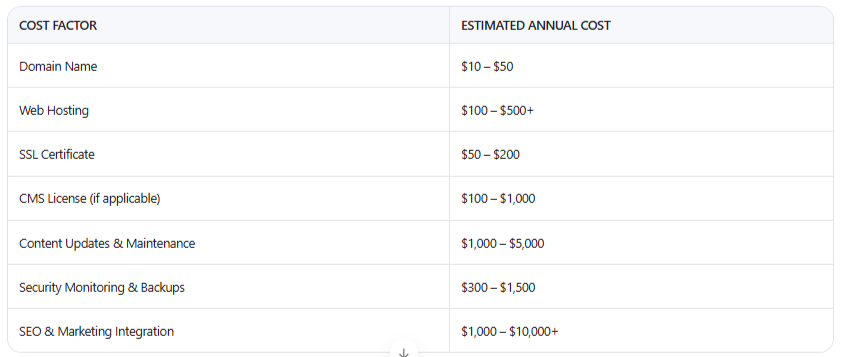
Maintenance neglect can lead to security vulnerabilities, broken links, and poor performance, which can negatively affect both the user experience and search engine rankings.
DIY vs. Hiring a Professional
There are many DIY website builders available on the internet today, such as Wix, Squarespace, and Webflow. However, they have several disadvantages in addition to being simple to use:
✅ Pros:
- Low upfront cost ($10–$50/month)
- Drag-and-drop editors
- Built-in templates and hosting
❌ Cons:
- Limited scalability and customization
- Poor SEO control
- Platform lock-in (hard to migrate later)
- Lack of unique branding
The benefits of investing in a professionally developed website include better performance, greater flexibility, and higher conversion rates over the long term for serious businesses aiming for growth.
Factors That Increase Website Development Cost
Here’s what makes a project more expensive and often more valuable:
- Custom Design: Unique layouts beat cookie-cutter templates.
- Advanced Features: Chatbots, AR previews, multi-language support.
- Third-Party Integrations: APIs with CRM, ERP, or marketing tools.
- User Experience (UX): Wireframing, prototyping, usability testing.
- Scalability & Future-Proofing: Code written for growth.
- Security Requirements: Especially critical for finance, health, or legal sites.
When requirements are complex, developers, designers, and project managers must collaborate more closely, increasing the amount of time and money spent on the project.
How Location Impacts Pricing
Where your development team is based significantly affects pricing:
- North America / Western Europe: $100 – $200/hour
- Eastern Europe: $50 – $90/hour
- Asia (India, Philippines): $25 – $60/hour
Many companies choose offshore or nearshore teams to balance quality and affordability. However, communication, timezone alignment, and cultural understanding are crucial for success.
Tips to Manage Your Website Development Budget
- Define Clear Goals: Know exactly what you want before starting.
- Prioritize MVP Features: Launch core functionality first.
- Choose the Right Tech Stack: Avoid over-engineering.
- Get Detailed Quotes: Compare proposals with itemized breakdowns.
- Plan for Ongoing Costs: Include maintenance in your budget.
- Work with Experienced Partners: Skilled teams reduce costly revisions.
Remember: The cheapest option isn’t always the best value. A poorly built site can cost more in lost traffic, conversions, and rework.
Conclusion: Invest Wisely in Your Digital Future
It is imperative for you to understand the cost of website development in 2025 so that you can budget wisely and build a website that delivers substantial returns on investment. We have solutions for every budget, whether you require a simple landing page or a powerful web application.
However, quality, scalability, and user experience should be prioritized above all else. The website is your brand’s digital storefront, so it should reflect the professionalism and vision of your organization.
Zinavo specializes in developing high-performance, future-proof websites tailored to meet your business objectives. We provide you with the guidance you need from strategy to launch and beyond to ensure that your project is on time, on budget, and ahead of the competition.
Are you ready to bring your website idea to life? Let Zinavo help you turn your vision into a powerful digital reality.