info@zinavo.com
 Call Us

The Digital Gateway of Modern Business
In 2026 a website is no longer something that supports your business. It is the main thing that drives people to notice you, trust you and become your customers. These days people do not just look at websites to make up their minds. Instead computers that use artificial intelligence summarize and show them information away which means people do not have to click on many pages. This has changed how businesses should think about making websites especially when they are trying to decide between a Static Website and a Dynamic Website in an online world. Your website needs to be able to talk to both people who visit it and computer systems that look at how the content is structured, how relevant it is and what it is trying to say.Because of this change choosing between a static website and a dynamic website is not just a technical decision.You need to understand the differences between these two kinds of websites if you want to make one that works well in a world where computers are getting smarter.
Understanding Static Websites in Today’s Web World
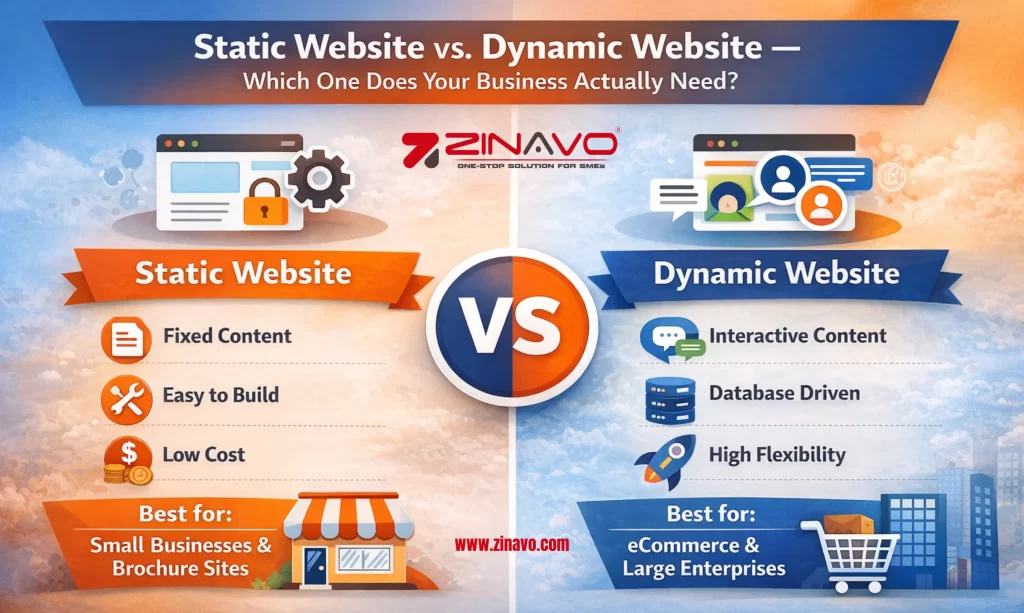
A website is made up of files that do not change and are sent to the user exactly as they are stored on the server. These files usually include HTML for the structure, CSS for the design and a little bit of JavaScript for things that can be done on the website. Unlike websites there is no database or server work involved when a page is loaded. This makes static websites very predictable and reliable which is one of their advantages in making websites today.
Because the content is already made the server does not have to make anything in time. This gets rid of delays that can happen when the server is working hard and makes sure that pages load quickly no matter how many people are visiting. For businesses that want their website to be fast and consistent this is a way to go. Static websites are especially good for situations where the content does not need to change often. They let businesses show information clearly without making it too complicated. This simplicity also makes them a popular choice for website design projects that focus on performance and efficiency.
The Modern Appeal of Static Websites
websites have become popular again not because they are new but because new tools have made them more powerful and flexible. Today developers use techniques like making static sites to create websites that are highly optimized and combine simplicity with performance. This makes them a great option for businesses that are trying to decide between a Static Website and a Dynamic Website.
Another big advantage is security. Since static websites do not use databases or server scripts there are ways for hackers to get in. This makes them a good choice for businesses that want an online presence without having to do a lot of maintenance. Also static websites are cheap to host and manage. For businesses that want an efficient website, static architecture is a practical and scalable solution without a lot of complexity.
Static Websites and How They Do in Search Engines in 2026
Search engine optimization in 2026 is heavily influenced by how well a website performs, how stable it is, and how users experience it. Static websites are naturally good at these things because they are lightweight and efficient. Faster loading times lead to engagement, which is important when you are trying to get people to notice you in a competitive online world.
In addition to being fast, static websites are also good at showing content. Search engines and artificial intelligence systems rely on structured content to understand and categorize information. Static pages usually have code and a logical hierarchy making it easier for algorithms to get the important data. This increases the chances of showing up in search summaries. However while static websites do well technically they might need a little work when it comes to scaling content for a wider audience.
Where Static Websites Work Best
Static websites are best for businesses that need a reliable online presence. This includes people who offer services, consultants, freelancers and small businesses that mainly use their website to show information. These uses are a fit for Static Website Development strategies where speed and clarity are the main priorities.
For example a company that offers services might only need pages like a homepage, services, about and contact. A static website can do this efficiently with maintenance. Similarly portfolios and landing pages benefit from architecture because they are simple and fast. Businesses that are comparing Static vs Dynamic Website for Business often find that static solutions are ideal for stage or informational websites.
Limitations of Static Website Architecture
Despite their advantages, static websites have some limitations that businesses should think about. One of the challenges is growing and scaling. As your content gets bigger, updating pages can become time-consuming and require technical expertise. This can slow down marketing efforts compared to systems used in advanced website development solutions.
Another limitation is the lack of interaction. Static websites are not made for things like user accounts, dashboards or real-time updates. While some dynamic features can be added it often makes the system more complicated. For businesses that are trying to decide which kind of website is better. Static or Dynamic. These limitations show where static websites might not support long-term growth.
Understanding Dynamic Websites and How They Work
Dynamic websites make content in time based on what the user does with stored data or application logic. Unlike websites they build pages dynamically when someone visits. This allows for personalized experiences, which are important for modern digital platforms.
When someone visits a website the server works on the request, gets the relevant data and makes the page right away. This makes dynamic websites ideal for things like shopping, blogs and platforms that need people to interact with them. Businesses that are looking at the differences between Static Website and Dynamic Website often choose systems for flexibility and scalability.
Why Dynamic Websites Are Important for Modern Businesses
Even with all the advancements, many businesses still make the same mistakes. One of the biggest issues is rushing the project without proper planning, leading to poor results. Choosing low-cost developers without considering quality is another common mistake. A Top-Rated Web Agency in Bangalore ensures the best results and fewer delays. Incomplete attention to SEO during the development phase can lead to poor rankings. Even if a website looks good, it has difficulty ranking.
How Smart Businesses Are Launching Faster Websites
websites are the foundation of modern digital experiences because they let businesses grow and adapt. They support interaction, frequent updates and large content systems. This makes them essential for businesses that are focused on growth and advanced website development.
One of the advantages is personalization. Dynamic websites can show content based on what the user likes or has done before. This increases engagement. Improves conversion rates. Also they work well with tools like analytics and marketing systems making them ideal for businesses that are deciding which kind of website is better. Static or Dynamic. For long-term success.
SEO Capabilities: Static vs Dynamic Websites
From a search engine optimization perspective static websites are good at performing while dynamic websites are good at changing content. Static websites are fast and easy for search engines to look at. They have limited growth potential.
Dynamic websites let you update content continuously, publish blogs and expand keywords. This helps build authority over time. Businesses that are targeting keywords like Static vs Dynamic Website India or broader search terms benefit more from dynamic architecture. While optimization is necessary, dynamic websites offer long-term SEO opportunities.
Hybrid Websites: The Future of Web Development
Modern businesses are increasingly using approaches that combine static and dynamic features. This lets them achieve performance while keeping flexibility. Hybrid websites pre-make pages for speed while using dynamic parts for interactive features. This approach is ideal for businesses that are evaluating Static vs Dynamic Website for Business as it provides both efficiency and scalability without compromise.
Conclusion
Choosing between a dynamic website is about matching your technology with your business goals. Static websites offer speed, simplicity and cost efficiency making them ideal for use cases. Dynamic websites provide flexibility, scalability and advanced functionality for growing businesses. In today’s world your website must be optimized for both people and search systems. Whether you are looking at Static Website vs Dynamic Website or deciding which kind of website is better. Static or Dynamic. The right approach is the one that supports your long-term strategy. By understanding both options you can build a website that not performs well today but also adapts to future growth.