info@zinavo.com
 +91-77602 45945

Introduction
Your website is often the first interaction customers have with your business, and it plays a critical role in shaping trust, engagement, and conversions. For Indian SMEs, startups, and growing enterprises, choosing the right website structure for Indian SMEs is one of the most important digital decisions that directly impacts SEO performance, lead generation, and long-term scalability. In today’s highly competitive digital ecosystem, especially in cities like Bangalore, Mumbai, and Delhi, businesses are not just competing for visibility, they are competing for attention, trust, and conversion. This makes it essential to choose a website structure that aligns with your business goals and growth strategy. One of the most common challenges business owners face is deciding between a single-page website and a multi-page website. Both fall under different approaches to website structure for Indian SMEs, and both can work effectively depending on business stage, content depth, and marketing strategy.
What is a Single Page Website?
A single-page website is a simplified approach to website structure for Indian SMEs, where all business content is placed on one continuous scrolling page. Instead of multiple pages, users navigate through sections such as services, about, testimonials, and contact on a single layout.
This structure is widely used by startups and small businesses because it offers speed, simplicity, and cost-effectiveness. It allows businesses to launch quickly and present their message in a focused, conversion-driven format. However, while it is efficient for early-stage businesses, it has limitations when it comes to SEO scalability and long-term growth within the broader concept of website structure for Indian SMEs.
Benefits of Single Page Websites
Single-page websites provide a clean and minimal approach to website structure for Indian SMEs, making them ideal for businesses that want fast deployment and simple communication. They are highly mobile-friendly and create a smooth scrolling experience that works well for modern users. They also help businesses deliver a focused brand story without distractions, making them effective for conversions and landing-page-style marketing campaigns.
Advantages
- Fast and cost-effective to develop
- Mobile-friendly and easy to navigate
- Strong storytelling and conversion-focused design
- Ideal for startups, portfolios, and single-service businesses
Limitations of Single Page Websites
Despite their simplicity, single-page websites have limitations in the context of website structure for Indian SMEs. The biggest drawback is limited SEO capability. Since all content exists on one page, it becomes difficult to target multiple keywords or rank for different search queries. As businesses grow, scalability becomes an issue. Adding more services or content can make the page cluttered, reducing user experience and clarity. This is why many businesses eventually move beyond a single-page structure.
Limitations
- Limited SEO opportunities (only one page to rank)
- Difficult to scale as business grows
- Limited keyword targeting
- Basic analytics tracking
What is a Multi-Page Website?
A multi-page website is a structured and scalable model of website structure for Indian SMEs, where content is divided into multiple dedicated pages such as Home, About, Services, Blog, and Contact. This structure is widely used by established businesses, agencies, and e-commerce platforms because it allows better organization, stronger SEO performance, and long-term scalability. Each page works as an independent SEO asset, helping businesses rank for multiple keywords and attract targeted traffic.
Benefits of Multi-Page Websites
Multi-page websites are considered the strongest form of website structure for Indian SMEs when it comes to SEO and long-term growth. Each page can target different keywords, improving visibility across search engines. They also support content marketing strategies like blogging, case studies, and service pages, which help build authority and trust over time. Additionally, they offer better navigation and user experience, allowing visitors to explore detailed information without confusion.
Advantages
- Strong SEO performance (multiple ranking opportunities)
- Scalable as business grows
- Better content organization
- Supports blogs, FAQs, and detailed services
Limitations of Multi-Page Websites
Multi-page websites require more planning and maintenance compared to simpler models of website structure for Indian SMEs. They take more time to design and develop, and each page needs proper optimization. However, with modern CMS systems and UX frameworks, these challenges are manageable and outweighed by long-term SEO benefits.
Limitations
- Higher development cost
- Requires ongoing maintenance
- Needs proper navigation planning
SEO Perspective: Why Website Structure Matters
From an SEO perspective,SEO website structure for Indian SMEs plays a major role in ranking performance. Multi-page websites clearly have an advantage because they allow keyword segmentation across different pages. This means businesses can rank for multiple services, locations, and search intents simultaneously. For example, a business can target different keywords like services, industries, and locations using separate pages. Single-page websites, while useful for branding and conversions, are limited in SEO scalability.
User Experience in Website Structure
User experience is another important factor in website structure for Indian SMEs. Single-page websites provide smooth scrolling and quick access to information, making them ideal for simple decision-making journeys. Multi-page websites provide structured navigation, allowing users to explore deeper content based on their needs. This is more suitable for service-based businesses or industries that require detailed information before conversion.
Best Website Structure for Indian SMEs
For Indian SMEs, the best website structure for Indian SMEs depends on business maturity. Startups often benefit from single-page websites due to their simplicity, affordability, and speed of launch. However, businesses that are focused on SEO, digital marketing, and long-term growth should invest in multi-page websites. This structure provides scalability, better keyword targeting, and stronger search visibility. Many businesses start simple and gradually evolve into multi-page structures as their digital strategy matures.
There is no one-size-fits-all answer.
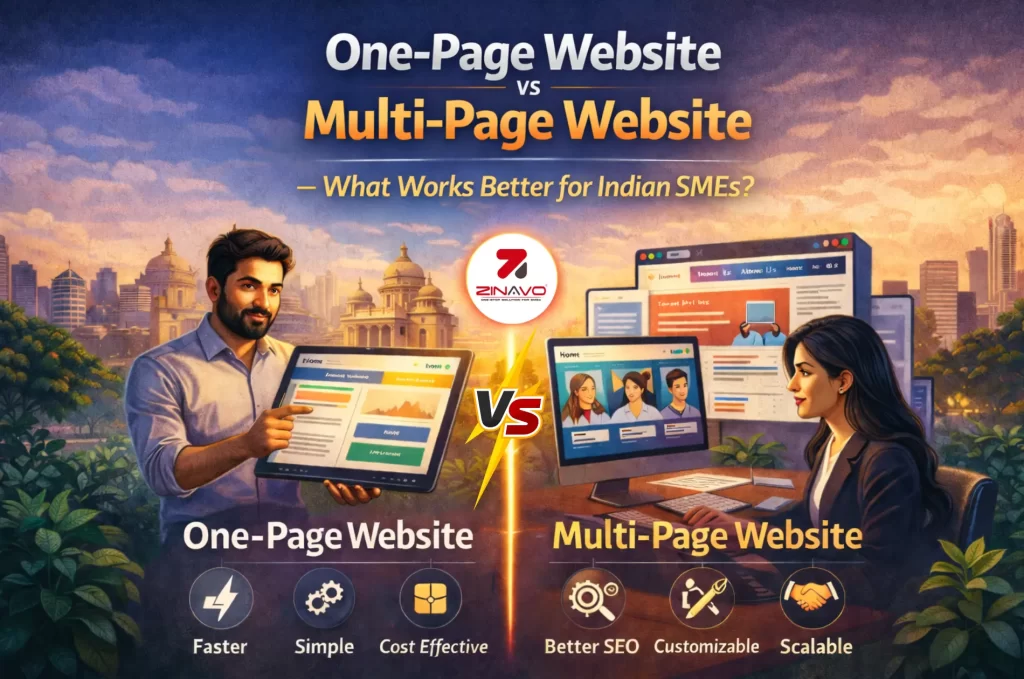
- Choose a one-page website if you need a fast, affordable launch with a focus on conversions.
- Choose a multi-page website if your goal is long-term growth, SEO visibility, and scalability.
For most Indian SMEs, a multi-page website is the better long-term investment, as it generates consistent organic traffic and leads over time.
Conclusion
Choosing between a single-page and multi-page website is not just a design decision but a long-term business strategy. Single-page websites are ideal for quick launches and conversion-focused goals, while multi-page websites are better suited for SEO growth, scalability, and long-term success. For most Indian SMEs, multi-page websites offer a stronger return on investment because they support continuous growth, better search visibility, and improved user engagement. A well-structured website is more than just an online presence; it is a powerful business growth engine that drives traffic, builds trust, and generates consistent leads.